
Nigeria presents one of the most complex environments for Christian–Muslim relations anywhere in the world.
Home to deep religious, ethnic, and regional diversity, the country has experienced recurring cycles of communal violence for decades. Although Nigeria’s constitution guarantees freedom of religion, these protections are often unevenly experienced across regions.
Enduring Challenges
In the Middle Belt and parts of northern Nigeria, tensions have been fueled by disputes over political power, land use, local governance, and the role of Sharia law. Some cities have become symbols of prolonged mistrust and periodic violence.
At the same time, many faith leaders across Nigeria continue to work courageously for peace, often at great personal risk. The challenge lies in translating these efforts into durable, systemic change.
MFNN’s 2025 Engagement
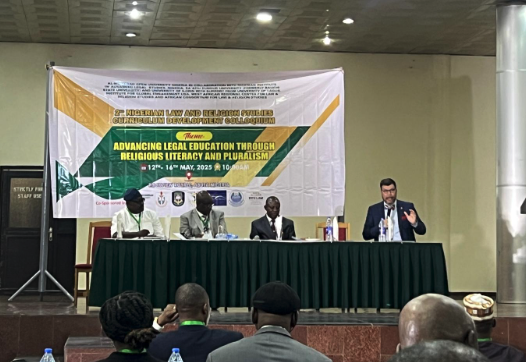
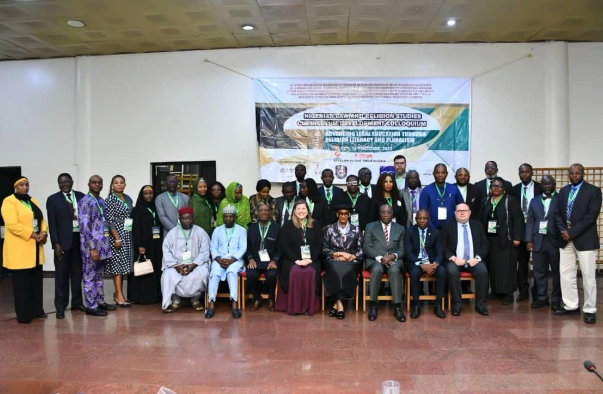 In 2025, the Multi-Faith Neighbors Network (MFNN) was invited by partners at the International Center for Law & Religion Studies (ICLRS) to participate in a series of conferences in Abuja.
These gatherings brought together law school deans from across Nigeria to develop a curriculum on Religion and the Rule of Law, aimed at strengthening legal and institutional understanding of religious freedom.
MFNN Director Pastor Micah Fries and MFNN Imam Coordinator Imam Ahmed Alamine traveled to Abuja twice during the year, contributing to curriculum development and building relationships with Nigerian legal scholars and institutional leaders.
Toward a Long-Term Strategy
Beyond the immediate success of the conferences, MFNN received an invitation to deepen its engagement in Nigeria through a long-term partnership with its sister organization, The Institute for Global Engagement (IGE).
The proposed approach combines top-down and bottom-up strategies:
- Top-down: Engaging jurists, lawmakers, and civil society leaders to reinforce religious freedom norms within legal and political institutions.
- Bottom-up: Working with clergy and community leaders to foster grassroots trust and cooperation across deep theological and ideological divides.
This integrated model reflects a core insight: lasting peace in Nigeria requires both structural reform and relational transformation.
Looking Forward
 Nigeria’s challenges are immense, but so is its potential. By addressing religious freedom at both institutional and community levels, MFNN’s approach seeks to support Nigerian leaders already committed to peace, and to strengthen the conditions under which coexistence can endure.