

Building Bridges Across Faith: Reflections from the Global Faith Forum
Each year, faith leaders from across the United States gather for the Global Faith Forum (GFF), an annual convening hosted by the Multi-Faith Neighbors Network (MFNN). The forum brings together imams, pastors, rabbis, and other religious leaders who represent a wide range of theological traditions and perspectives. What unites them is a shared commitment to strengthening their communities and building relationships across lines that too often divide.
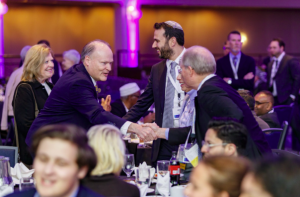
The February 2026 GFF in Washington, DC, exemplified this mission. Through keynote sessions, small-group conversations, and informal gatherings around shared meals, participants experienced the unique power of multifaith dialogue grounded in authenticity rather than agreement.
For Imam Abdelhameed Dawod of Los Angeles, the gathering illustrated the importance of relationships in sustaining civic life. Reflecting on his experience attending MFNN events since joining the network in 2023, he described the forum as a powerful reminder of the value of social capital.
“Since joining MFNN in May 2023, I have had the privilege of attending four conventions and one retreat. Each assembly has strengthened my recognition for the work MFNN is doing to cultivate relationships among faith leaders across the country. The February 2025 Global Faith Forum in Washington, DC, was especially meaningful. It reminded me of Robert Putnam’s insight in Bowling Alone, where he describes the importance of social capital in strengthening communities and democratic life. During the gathering, I experienced both forms of civic capital he described, bonding and bridging.”
For Dawod, the forum fostered both deeper relationships within faith communities and meaningful connections across traditions.
“I met fellow imams from different states whose experiences in multifaith engagement deepened bonds within the Muslim community, among imams, and with community leaders. At the same time, the forum created space for valuable relationships with Christian pastors and Jewish rabbis, building bridges across traditions in a spirit of trust and mutual purpose.”
These encounters, he noted, reflect the broader impact of gatherings like the Global Faith Forum.
“These encounters reflected the deeper spirit of the Global Faith Forum, demonstrating that multifaith cooperation grounded in respect, solidarity, and shared responsibility can have a powerful impact and improve our daily lives. The main takeaway from my experience is that gatherings like the GFF restore essential human bonds among people of faith who are responsible for their communities as leaders, sustain civic life in our communities, and strengthen democracy in our societies.”
He left the gathering encouraged by the dedication of faith leaders working together to address shared challenges.
“I left the forum encouraged by the dedication of faith leaders who are working together to build relationships, respond to challenges facing our communities, and promote a culture of mutual respect both within the United States and across the wider world. I sincerely appreciate MFNN for its continued commitment to bringing faith leaders together and nurturing the relationships that strengthen our communities and our shared civic life.”
While the forum includes keynote presentations and structured conversations, many participants say the most meaningful moments happen in informal settings.
Pastor Chris Freeland of Fort Worth found those unscripted interactions especially valuable.
“The forum keynotes were both extremely worthwhile for me but the best part was the moments of informal connection. I was excited to see two other leaders from my region at the Global Faith Forum who I didn’t know would be present.”
Those moments allowed him to process the experience alongside leaders from both within and outside his own tradition.
“It was especially beneficial to process the Forum with a friend and local leader of a different faith, as well as with a friend who shares my faith but attends a different church. I also really enjoyed listening to two Rabbis at my dinner table as they processed their recent (and distinct) experiences with antisemitism and how they were leading their congregations as distinct minorities in very different parts of the country.”
For Daniel Darling, also from Fort Worth, the forum’s distinctiveness lies in its commitment to honest engagement without requiring participants to compromise their convictions.
“I had an amazing time, learning and growing from a wide variety of leaders. What’s unique about this gathering is that religious leaders come as who they are. I’m a Southern Baptist, conservative politically and theologically. I wasn’t asked to give up those beliefs or identity.”
Instead, the forum creates space where leaders can engage across real differences while recognizing shared concerns.
“And yet we interacted with folks with whom we deeply disagreed and yet share common concerns about our communities, our country, and our world.”
Pastor Naeem Fazal of Charlotte reflected on the deeper human impact of the gathering and the perspective it offers on faith and community.
“Attending the Global Faith Forum is always an eye-opening experience. It reminds me both how big our world is and how deeply connected we are within it. The conversations reveal how different and yet how similar we are as human beings. It reaffirms that faith, love, and hope remain essential to our shared humanity. From the one-on-one conversations to the speakers and presentations, every moment challenges me to honor one another’s faith, expand my capacity for empathy, and strengthen my resolve to live with hope.”
For Pastor Micah Fries, Director of the Multi-Faith Neighbors Network, that dynamic reflects the organization’s central vision.
“The Global Faith Forum was an exercise in our foundational premise at MFNN, namely that people of deep, often irreconcilable theological differences, can gather together, learn from one another, deepen bonds of friendship, and find ways to collaborate together, while retaining all of their unique theological distinctives.”
Fries believes the forum demonstrates something that many people in society assume is impossible.
“It was beautiful to watch people who most of society would imagine as enemies sit at tables together and learn more about the other—sharing their faith with one another and demonstrating the power of relationship; authentic relationships that do not require strict agreement to sustain.”
At a time when public discourse often emphasizes division, the Global Faith Forum offers a different model. By bringing together leaders who remain firmly rooted in their own traditions while engaging others with curiosity and respect, MFNN creates spaces where trust can grow, and collaboration can begin.
For the participants who gather each year, the forum is not simply a conference. It is a reminder that relationships—built through honest conversation, shared experiences, and mutual respect—can strengthen communities and contribute to a healthier civic life for all.