

Chattanooga Faith Leaders Gather to Strengthen Religious Freedom Through Civil Engagement
On May 20, 2026, faith leaders, civic leaders, scholars, and community members gathered at the Bessie Smith Cultural Center in Chattanooga, Tennessee, for the Chattanooga Faith Forum, an event focused on strengthening religious freedom through civil dialogue. The forum brought together representatives from a wide range of faith traditions and backgrounds to discuss the importance of protecting religious liberty, fostering understanding, and building stronger relationships across lines of difference.
Held as part of the broader America 250 celebration taking place throughout Hamilton County and Chattanooga, the forum reflected a growing recognition that America’s democratic traditions depend not only on laws and institutions, but also on the ability of citizens to engage one another with dignity despite profound differences.
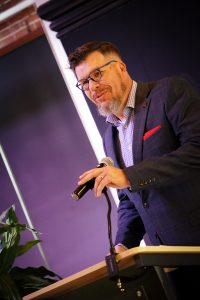
Among the featured participants was Micah Fries, Director of the Multi-Faith Neighbors Network (MFNN), whose work centers on helping communities cultivate trust and understanding across religious differences. Fries has spent years cultivating relationships among people of different faith traditions in the Chattanooga area and beyond, helping communities move beyond fear and misunderstanding toward mutual respect and cooperation.
During the forum, Fries spoke directly about the increasingly hostile nature of public discourse and the temptation to diminish others when disagreements become intense.
It is weak, and it is cheap to disagree through the process of dehumanization, and in fact, betrays a lack of confidence in your own convictions. When we have to devalue and dehumanize the other, it screams we are rooted in our own particular insecurities. – Micah Fries
His comments reflected one of the forum’s central themes: disagreement does not require hatred. Participants consistently emphasized that democratic societies depend on citizens’ ability to engage with one another honestly while still recognizing each other’s humanity and dignity.
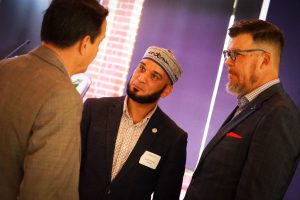 MFNN has long advocated for this kind of engagement. Through engagement initiatives, educational opportunities, and relationship-building efforts, MFNN works to help people from differing faith traditions become better neighbors and stronger partners within their communities. The Chattanooga gathering represented a public expression of that mission.
Fries also addressed the meaning of religious liberty and the importance of protecting the rights of people’s conscience, even when disagreements remain substantial.
This means that I can say to you, with full confidence and conviction, ‘I think you’re wrong.’ But I can still defend your right to speak, worship, gather, and live according to your conscience. It means we can reject the false choice between conviction and compassion. – Micah Fries
The statement resonated with the broader conversation throughout the forum, where speakers emphasized that protecting freedom of conscience requires defending the rights of people whose beliefs may differ dramatically from one’s own.
Judge Curtis Collier, United States district judge for the Eastern District of Tennessee, underscored the constitutional importance of those freedoms during his remarks.
The ability to speak freely, worship freely, and disagree freely is central to the American constitutional tradition. – Curtis Collier
Collier’s comments connected the day’s discussions to the broader American experiment in religious liberty, reminding attendees that freedom of belief and expression remains foundational to the nation’s democratic framework.
The forum also featured reflections on the realities of navigating religious diversity within modern communities. Imam Ahmed Fawzy of the Islamic Center of Greater Chattanooga spoke candidly about the challenges that emerge when people lack a meaningful understanding of one another.
We have to understand that we are different, all the way. The real issue is not that we are different, but that we often do not know how to manage these kinds of differences. – Imam Ahmed Fawzy
His comments reinforced the forum’s emphasis on education, listening, and relationship-building as essential practices for healthy civic life. Speakers repeatedly noted that ignorance and isolation often create fear, while familiarity and dialogue can help reduce suspicion and hostility.
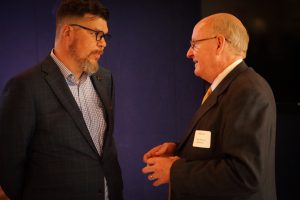
Elder Steven Bodhaine, Area Seventy for The Church of Jesus Christ of Latter-day Saints, emphasized Chattanooga’s diversity and the purpose behind bringing together leaders from many traditions.
It’s a remarkable community… people from all over the world bringing with them different faith traditions, different spiritual perspectives. This forum is designed to bring people together to listen carefully to one another to talk about the role of faith, religion, and spirituality. – Elder Steven Bodhaine
The forum took place amid increasing national conversations about the relationship between religion, politics, and public life. During his remarks, Fries addressed concerns surrounding forms of Christian nationalism and the dangers of using political power to compel religious conformity.
They (some Christians) desire to see Christianity enshrined at a federal level as the privileged view of the country. They are convinced that this will lead to a better America, but history teaches us exactly the opposite lesson. Faith that is coerced is no faith at all. As an evangelical Christian, I’m convinced genuine faith has to be an authentically chosen faith. Love cannot be compelled. Worship cannot be manufactured through political pressure. The conscience is sacred precisely because human beings are created with dignity and moral agency, and this is why religious liberty matters. – Micah Fries
Those comments reflected the broader conviction shared throughout the event that religious liberty is strongest when it protects all communities equally rather than elevating one tradition through government power or coercion.
For MFNN, participation in the Chattanooga Faith Forum represented more than a single public event. It reflected the organization’s ongoing commitment to helping communities engage religious diversity with wisdom, humility, and compassion. Through forums like this, MFNN seeks to encourage people to move beyond stereotypes and fear-driven narratives toward genuine understanding and cooperation.
The setting of the gathering also carried symbolic significance. The Bessie Smith Cultural Center has long served as a place where Chattanooga’s diverse stories and histories are preserved and celebrated. Hosting a multi-faith conversation within that context reinforced the forum’s broader message that strong communities are built when differing voices and experiences are acknowledged rather than ignored.
Participants throughout the day emphasized that religious liberty cannot survive through legal protections alone. While constitutional safeguards remain essential, the health of a society is ultimately shaped by the character of its people and the relationships they cultivate with one another. Laws may establish rights, but neighbors determine whether communities are marked by fear or by trust.
As attendees departed the Bessie Smith Cultural Center, the Chattanooga Faith Forum offered a hopeful example of what civil engagement can look like in a deeply divided cultural moment. Rather than avoiding difficult conversations, the event demonstrated that people with profound disagreements can still gather together, speak honestly, listen carefully, and defend one another’s dignity.
For MFNN, the forum represented another important step toward a larger mission: helping people of differing faiths become better neighbors, stronger communities, and partners in the pursuit of peace and human flourishing.